Diaspora Property Buying Guide: How to Buy in Kenya While Living Abroad
Buying property in Kenya from the UK, North America, Australia, or the Gulf requires disciplined legal and financial safeguards. Here is how to complete cross-border conveyancing safely without relying on informal family favors.

Every year, thousands of Kenyans living in the United Kingdom, the United States, Canada, Australia, and the Gulf states send billions of shillings home to build personal security and create long-term wealth. According to official Central Bank of Kenya remittance data, diaspora inflows consistently rank among the country largest sources of foreign exchange, exceeding traditional export commodities like tea, coffee, and horticulture.
Yet, alongside remarkable success stories of diaspora families securing generational homes and high-performing rental assets, there is a recurring counter-narrative: life savings routed through trusted family members that vanish without a title deed, off-plan projects with unfulfilled promises, and uninspected construction sites where foundations never rise past the damp-proof course.
Buying property in Kenya from across the world is entirely viable, predictable, and safe, provided you discard informal arrangements and adopt the same rigorous institutional discipline you would use when buying a home in London, Toronto, or Dallas.
The Golden Rule: Separate Family Relationships from Legal Conveyancing
The most critical vulnerability for diaspora buyers is the reliance on informal intermediaries. Asking a sibling, cousin, or childhood friend to oversee a multi-million shilling transaction places unfair emotional and financial strain on personal relationships. Even with the purest intentions, family members rarely possess the legal expertise required to read encumbrances on a title deed, interrogate a sectional plan, or enforce architectural milestone warranties.
A property transaction in Nairobi, Mombasa, or Nakuru is a formal legal contract, not a personal favor. Professional advocates, registered land surveyors, and licensed property managers carry professional indemnity insurance. Informal intermediaries carry zero financial liability when things go wrong.
Every step of your purchase must be managed through regulated professionals who answer to statutory oversight bodies: the Law Society of Kenya for advocates, the Board of Registration of Architects and Quantity Surveyors for building consultants, and the Estate Agents Registration Board for marketing agencies.
Understanding Remote Execution: Power of Attorney and Notarization
Under the Registration of Documents Act (Cap 285) and the Land Registration Act 2012, all title transfer instruments must be properly executed and witnessed by authorized persons before the Ministry of Lands will register a change of ownership.
If you cannot travel to Kenya in person to sign legal transfer documents, you have two primary mechanisms for formal execution:
1. Specific Power of Attorney
A Power of Attorney is a formal legal instrument authorizing a designated agent in Kenya to sign documents on your behalf. However, diaspora buyers must never sign a general Power of Attorney, which grants limitless control over your estate. Instead, your advocate must draft a Specific Power of Attorney that:
- Identifies the exact Land Reference Number (LR Number) or Sectional Title Unit.
- Explicitly specifies the exact acts the agent may perform, such as signing the transfer deed and receiving the title.
- Expressly forbids the agent from mortgaging, charging, transferring, or selling the property to any third party.
- Automatically expires upon successful registration of the transfer deed in your name.
2. Consular Attestation and Foreign Notarization
Any Power of Attorney or transfer deed signed outside Kenya must be verified before it can be legally recognized by the Registrar of Titles. You must either sign the document in the presence of a consular officer at a Kenyan embassy, high commission, or consulate, or have it authenticated by a local Notary Public. If signed before a foreign notary public, the document must be sent to the Ministry of Foreign Affairs in Nairobi for adjudication and stamp duty assessment before submission to the Lands Registry.
Cross-Border Wire Transfers, CBK Regulations, and Escrow Accounts
Wiring substantial sums of money across international borders requires full compliance with Central Bank of Kenya foreign exchange directives and the Proceeds of Crime and Anti-Money Laundering Act (POCAMLA). Inward remittances exceeding 10,000 US dollars (or equivalent in foreign currency) trigger mandatory compliance reporting.
To ensure smooth bank transfers without compliance delays or frozen funds, prepare the following documentation in advance:
1. A fully executed Agreement for Sale signed by both the vendor and the purchaser.
2. A formal call for funds letter from the vendor conveyancing advocate specifying the official client escrow account details.
3. Recent proof of foreign income, such as employment contracts, pay slips, or audited financial statements.
4. Your valid Kenyan Passport, National Identity Card, and KRA PIN Certificate.
Never send funds directly to a developer operating account or a private individual personal account. All deposits must be held in a regulated advocate client account under formal stakeholder escrow conditions until contractual obligations are met.
Independent Off-Plan Construction Progress Verification
For diaspora buyers purchasing off-plan apartments in areas like Kilimani, Kileleshwa, or Westlands, milestone-based payment schedules are standard practice. However, releasing funds based solely on digital renderings, computer-generated animations, or promotional marketing newsletters is dangerous.
| Construction Milestone | Typical Payment % | Required Verification Document |
|---|---|---|
| Booking & Sale Agreement Signing | 10% to 20% | Executed Agreement for Sale & Escrow Receipt |
| Groundbreaking & Substructure Complete | 10% to 15% | Consulting Engineer Foundation Certificate |
| Superstructure Frame (Floor by Floor) | 30% to 40% | Independent Clerk of Works Photographic Report |
| Roofing, Enclosure & Internal Finishes | 20% to 25% | Quantity Surveyor Materials & Finishing Audit |
| Practical Completion & Handover | 10% | Certificate of Practical Completion & Sectional Title |
Retain an independent consulting architect or structural engineer based in Nairobi to conduct quarterly site audits. For a modest inspection fee per visit, an independent professional will verify that concrete pour certifications meet structural standards, that approved architectural floor plans are followed, and that true progress matches the developer payment claims.
Step-by-Step Remote Acquisition Protocol
Follow this structured sequence to protect your capital and ensure legal certainty from initial property identification to title registration:
Step 1: Appoint an independent conveyancer registered with the Law Society of Kenya who represents only your interests, never the developer.
Step 2: Instruct your advocate to conduct an official digital search on ArdhiSasa, verifying the vendor registered ownership, leasehold tenure, and absence of active charges or caveats.
Step 3: Review and negotiate the Agreement for Sale, ensuring clear milestone release conditions, liquidated delay damages, and dispute resolution venues.
Step 4: Execute the Specific Power of Attorney through your nearest Kenyan diplomatic mission or certified notary public.
Step 5: Remit purchase installments through formal banking channels directly to the designated client escrow account with complete transaction references.
Key Takeaways
- 01.Never send property purchase money to personal bank accounts of family members or friends, always route funds through a licensed advocate escrow account.
- 02.Execute a specific Power of Attorney rather than a general Power of Attorney, limiting authority strictly to the designated title number.
- 03.All foreign executions must be attested by a Kenyan diplomatic mission or an authorized notary public and adjudicated by the Ministry of Foreign Affairs in Nairobi.
- 04.Comply proactively with CBK and international anti-money laundering regulations by preparing clear source-of-funds documentation for inward remittances.
- 05.Retain an independent project inspector or surveyor to certify off-plan construction milestones before authorizing installment releases.
Step 6: Commission independent architectural snagging before authorizing the release of the final 10 percent retention sum upon completion.
Step 7: Verify that your individual Sectional Title Deed has been duly stamped, registered on ArdhiSasa, and issued in your full legal name.

Zuri Estates Team
Property Advisory & Client Coordination
The Zuri Estates Team provides independent property guidance, market intelligence, and acquisition support across Nairobi and the Kenyan Coast. Operating from our Kilimani offices, our desk coordinates developer audits, physical site inspections, and legal conveyancing for homebuyers and investors.

Antony Baragu
Real estate strategist
This article has been reviewed by Antony Baragu to ensure the accuracy, completeness, and validity of all market metrics, property details, and investment guidance.
Related Residences, Developments & Neighbourhoods
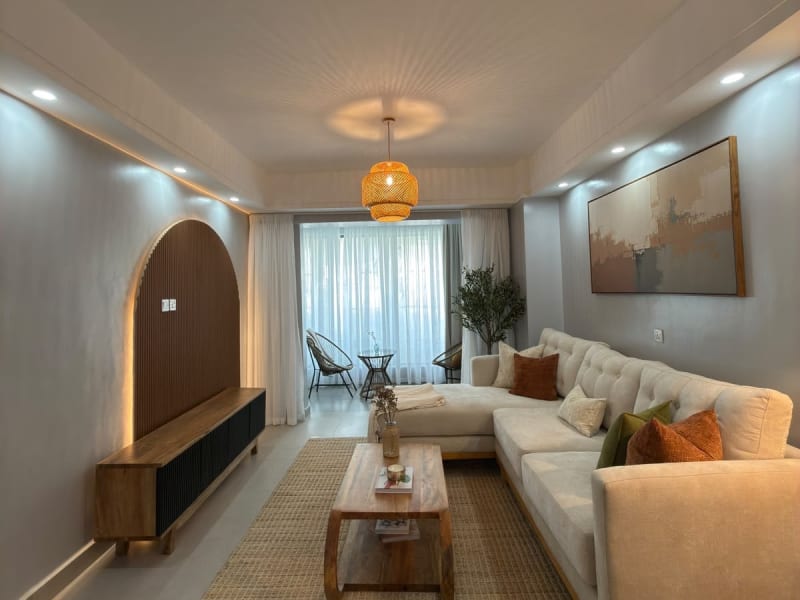
KILIMANI · MENELIK ROAD, OFF NGONG ROAD, KILIMANI, NAIROBI
Emerald Residences
Modern urban living with strong investment potential in Kilimani

LAVINGTON · NAIROBI
Lavington Luxury 5-Bedroom Villas
5 Bed • 5 Bath • Villa in Lavington

Westlands · Peponi Road, Westlands, Nairobi, Kenya
Diplomat Residences
Hotel-Inspired Living in One of Westlands' Most Prestigious Addresses

Westlands · Vihiga Road, Kilimani, Nairobi
Luster Arbor Residency
Modern apartments designed for elegant city living and exceptional long-term investment.

Featured Neighbourhood
Kilimani
Nairobi's vibrant apartment district with exceptional rental demand and investment potential.
Featured Neighbourhood
Westlands
Nairobi’s premier commercial and luxury residential district with exceptional investment potential.
Featured Neighbourhood
Lavington
One of Nairobi’s most prestigious residential neighbourhoods, known for luxury homes, green surroundings and family living.


