What Nairobi Property Developers Need to Do Differently in Kilimani, Lavington, Kileleshwa and Westlands
Apartment prices are falling in Westlands and Upper Hill while Lavington and Kilimani climb. Here is what that split reveals about escrow, delivery timelines, and design, and what developers need to change to win Nairobi's next generation of buyers.
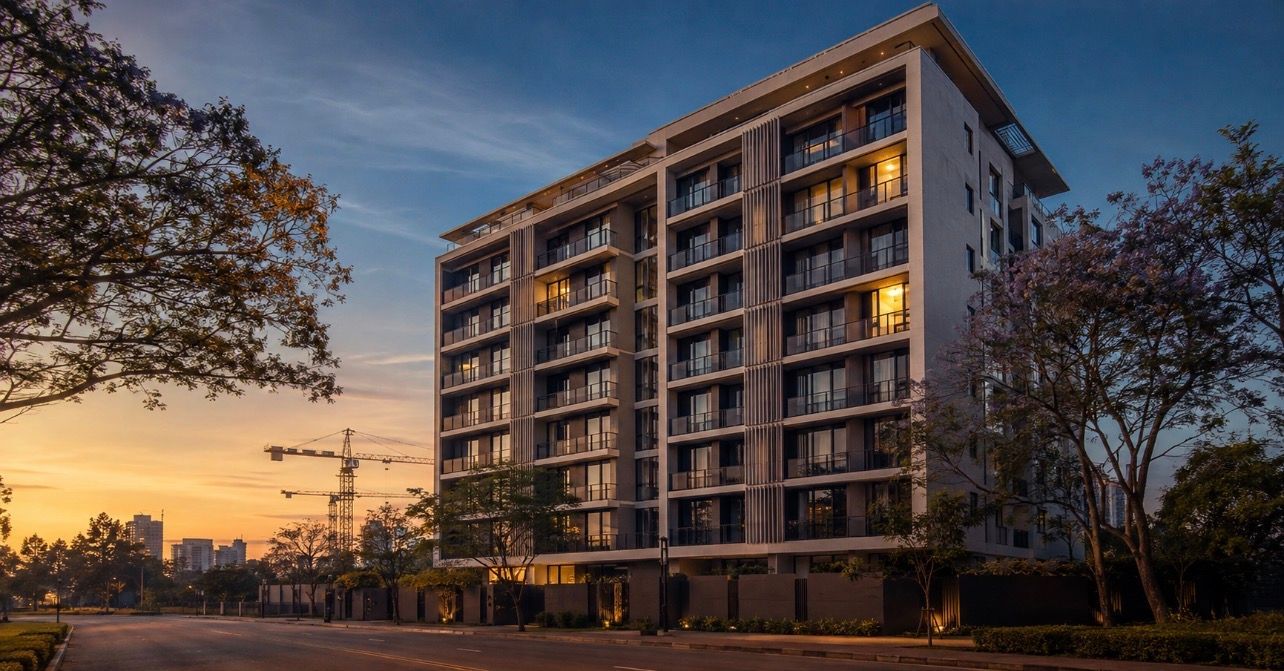
Let me tell you something nobody in this business says out loud, bwana. Half the buildings going up right now in Kilimani, Westlands, Lavington, and Kileleshwa shouldn't exist. Not because Nairobi doesn't need houses. We're short by well over two hundred thousand units a year, every single year. It's because somebody, somewhere, is building the wrong house, in the wrong place, for a buyer who stopped existing around 2019.
I was in Kilimani two weeks ago, walking a client through a block that opened eighteen months late. The caretaker met us at the gate, a quiet man called Otieno, keys hanging off his belt like a church choir. "Bwana, nimerudi, wapi joh," he said when he saw me, like we were two old friends meeting at a bar, not a broker and a landlord's watchman. Six floors. Forty units. Eleven occupied.
The infinity pool on the third floor had algae sitting quietly in the corner, nobody had bothered to hide it. Two "TO LET" banners flapped against the perimeter wall like flags that lost the war. Somewhere above us a generator the size of a matatu groaned awake for its test run, and Otieno just shook his head. "Hiyo generator inakula diesel kama mtu anakula ugali," he said, and man, I laughed harder than I should have, standing in a building that was quietly bleeding its owner dry.
That building is not an accident. It is the answer to a question a lot of buyers, agents, and even some developers keep asking me, so let's actually sit down and answer it properly, no fluff, the way you'd want it explained over coffee.
What are Nairobi developers doing wrong in Kilimani, Lavington, Kileleshwa and Westlands?
The short answer: they are still building for 2015. For a decade the formula was simple. Buy a plot in one of the prime four, put up something with a lift and a gate, write "luxury" on the hoarding, and watch the deposits roll in. That formula is dead, and nobody sent the memo.
Kilimani, Westlands, Hurlingham and Parklands have seen cranes stacked so close together that locals joke you could parkour from Yaya Centre to Hurlingham without touching the ground. We wrote about that quiet transformation in detail on the journal, because it explains a lot of what's happening on the ground right now: Nairobi's Quiet Transformation: The Rise of Kilimani, Westlands, Hurlingham and Parklands. The problem isn't that developers built. It's that most of them built the same thing. Same floorplan, same finishes, same rooftop gym nobody asked for, forty times over on the same street. Otieno's building is that story in one address.
Why are apartment prices falling in Westlands and Upper Hill while prices in Lavington and Kilimani keep rising?
This is the question that actually explains everything else. Land in Westlands and Upper Hill soaked up so much generic apartment stock that both areas have quietly gone backwards on price this year, with apartment values in Westlands slipping close to three percent and Upper Hill not far behind. Meanwhile houses in Lavington climbed over four percent in a single quarter, and Kilimani wasn't far off that pace.
The difference isn't location. All four neighbourhoods are still Nairobi's most desirable addresses. The difference is scarcity. Westlands and Upper Hill are oversupplied with identical apartment stock. Lavington and Kilimani are short on anything genuinely well built and well designed. The market didn't slow down, man. It got pickier. And the developers who kept building for a buyer who simply wanted an address are the ones sitting on empty floors and a diesel bill.
What do Nairobi buyers actually want from a new development in 2026?
They want honesty in the floorplan before they want another rooftop cinema. A lot of new apartment blocks are still designed around the open plan kitchen concept that photographs well but that most Kenyan buyers quietly do not want in their day to day life, especially where the smell and mess of cooking ugali, sukuma or fish needs its own room. We went deep on that exact tension on the journal here: Why Do So Many Kenyans Still Prefer Closed Kitchens? The Story Behind Modern Apartment Design.
Buyers also want the amenities that were promised to actually work once they move in. A backup generator that covers the whole unit, not just the corridor lights. A borehole that runs during the dry season. A lift that hasn't broken down by month four. The gap between developments that deliver on this and developments that don't has widened noticeably in the last two years, and buyers can now tell the difference from the first site visit, sometimes just from the smell of the stairwell.
How can developers protect buyers from off-plan property fraud in Kenya?
This is the part of the industry that keeps me up some nights, honestly. Kenyans in the diaspora sent home more than five hundred and ninety billion shillings in the first eleven months of 2025 alone, and a painful, unpublished slice of that went straight into developments that were sold on beautiful renderings and never actually built. We told one family's story on the journal, and it is not an easy read, but every developer in this market should sit with it: You Worked Too Hard to Lose It All.
The fix is not complicated, it is just inconvenient for developers who were hoping to use buyer deposits as working capital. Every shilling of a deposit should sit in an escrow account tied to a verified stage of construction, not a promise and a rendering. Contractors should carry an active National Construction Authority licence, and buyers should be able to check it. Titles should be verified before a single shilling changes hands, not after a dispute lands in court. If a buyer cannot tell the difference between an off-plan launch, a stalled site and a genuinely near completion project, that is on the developer's marketing, not the buyer's due diligence. We break down exactly how to tell these stages apart in this guide: The Complete Guide to Property Developments in Kenya: Off-Plan, Ready, Completed, Stalled and Everything In Between.
What legal responsibility do developers have when a project is delayed or handed over defective?
More than most developers in this market are currently acting like they have. Kenya's High Court has already ruled on this, and the ruling is plain. A developer who hands over a defective unit late, or fails to hand it over at all, can be made to pay for it properly, in damages, not just apologies. That sits alongside existing obligations under the Sectional Properties Act, the Consumer Protection Act and Nairobi's zoning and building approval requirements, all of which exist precisely to stop the kind of shortcuts that produced Otieno's half empty building. If you are developing or buying in this market, our guide to the current rules is worth the ten minutes: Nairobi's New Zoning Rules: What Every Buyer and Developer Must Know.
An NCA licence and a registered contractor used to be paperwork you filed and forgot. Saa hizi, it is the only wall standing between somebody's life savings and a stranger's slick video tour of a building that was never poured.
What should developers do differently to build long term trust and value in Nairobi's prime suburbs?
Build for the buyer who is actually walking your site today, not the one who existed a decade ago. That buyer has done their homework. They are asking about rental yield, exit potential and whether the block next door is half empty before they ask about the price per square metre. Meet them there.
Design with an honest sense of what a building does to the block around it, not just what it does to a sales brochure. We wrote about this properly here, because it matters more than most developers give it credit for: What Architecture Does to a Neighbourhood. A building is never just a building. It is a statement about who belongs here and what this land is worth.
And build the one thing this corridor is genuinely short of. Not more square footage stacked forty times over, but a building somebody actually wants to come home to. One with a generator that doesn't eat diesel like a hungry man eats ugali. One without algae quietly growing in the corner of the pool. One where the deposit sat in escrow the whole time, tied to real concrete poured on a real date, exactly like the contract said.
Otieno locked the gate behind us, and I stood there a minute, looking up at forty units and eleven lit windows. We spent a decade chasing the address, man. Turns out the address was never the point. It was never the point.

Antony Baragu
Real estate strategist
Antony specializes in strategic acquisitions across Nairobi's most established residential enclaves, including Kilimani, Kileleshwa, and Westlands. His analytical approach and detailed understanding of off-plan developments assist buyers and investors in evaluating property specifications, payment structures, and market timing.
Related Residences, Developments & Neighbourhoods

WESTLANDS · NAIROBI
Oak West 2 Bedroom Apartment
Contemporary 2-bedroom living in the heart of Westlands.

WESTLANDS · MUTHITHI ROAD, WESTLANDS, NAIROBI, KENYA
Capella Residency Studio Apartment
Modern studio living in the heart of Westlands.

Westlands · Muthithi Road, Westlands, Nairobi, Kenya
Montbleu Residences Westlands
Elevated Living. Timeless Design. Prime Westlands Address.
Kilimani · kilimani, Elgeyo Marakwet Road, Nairobi, Kenya
Wilma Towers
kilimani

Westlands · Brookside Grove, Westlands, Nairobi
ATREUS Brookside
Where Luxury Meets Strategic Brilliance

Featured Neighbourhood
Kilimani
Nairobi's vibrant apartment district with exceptional rental demand and investment potential.
Featured Neighbourhood
Westlands
Nairobi’s premier commercial and luxury residential district with exceptional investment potential.
Featured Neighbourhood
Kileleshwa
A peaceful, upscale neighbourhood offering elegant apartment living close to Nairobi’s key business districts.
Featured Neighbourhood
Lavington
One of Nairobi’s most prestigious residential neighbourhoods, known for luxury homes, green surroundings and family living.