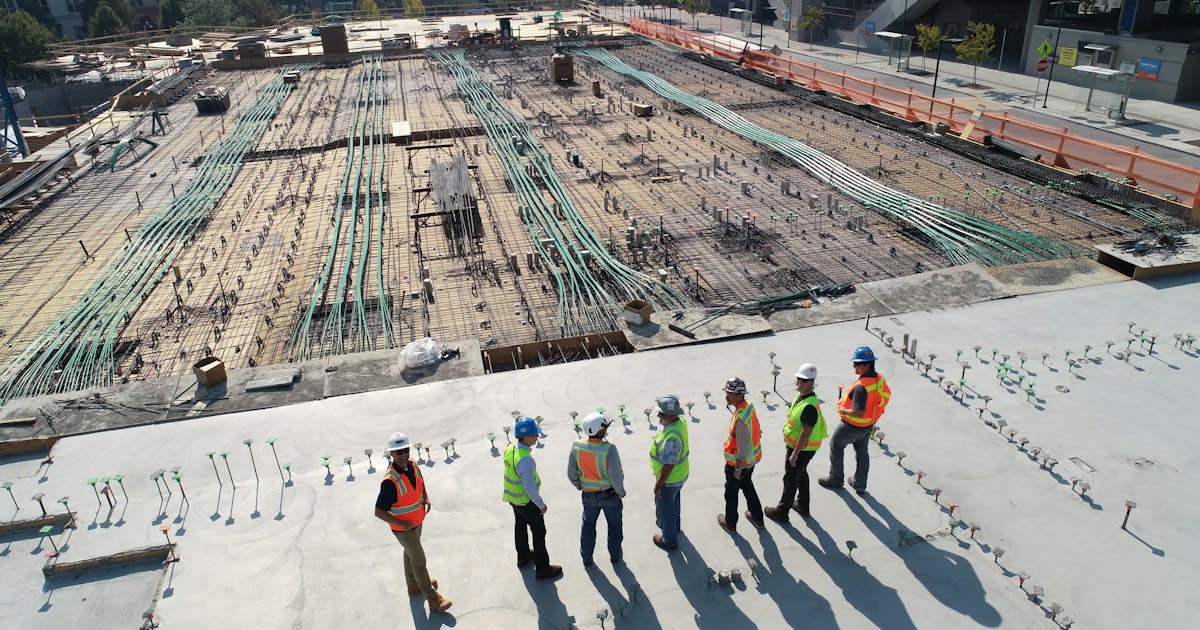
When a Building Falls: What the Eastleigh Collapse Tells Us About Property Safety in Kenya
A multi-storey building collapsed in Eastleigh, Nairobi on 23 October 2026, reigniting an urgent question: how can buyers, tenants and investors know whether a building in Kenya is safe? What happened, what is still unknown, and what every property decision-maker should check.
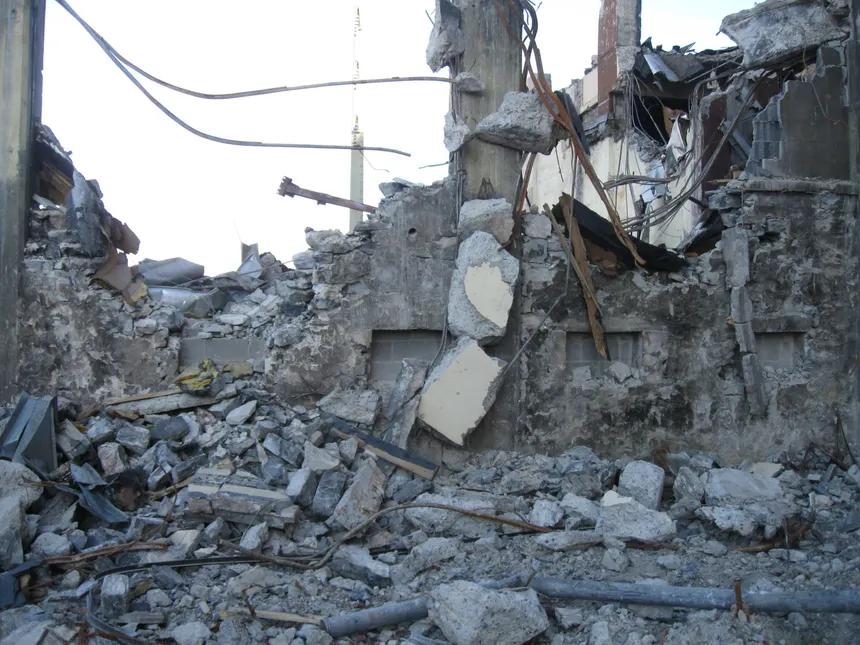
At around 1:00 in the afternoon on Friday, 23 October 2026, a building under active construction on 9th Street in Eastleigh, Nairobi, came down. The structure had been rising floor by floor above a ground level already occupied by shops. Workers were on the upper levels. Traders were open for business below. In the minutes that followed, a multi-agency rescue operation began that would continue into the following day.
What Eastleigh experienced was not the first building collapse in Nairobi's recent history, and the questions it raised are not new. But they matter, and they matter to anyone who has bought a flat, rented a shop, walked through a construction site, or trusted that a building with a modern facade is safe to enter.
This article presents what is known, what has been officially stated, what remains under investigation, and what every person making a property decision in Kenya can actually do to protect themselves.
Research Cutoff and Developing Situation
This article was researched and written on 24 October 2026. The casualty and rescue situation remained active at the time of publication, and key findings from ongoing investigations had not yet been released. Treat casualty figures and investigation updates as time-sensitive. Check current news sources for the most recent information.
What Happened on 23 October 2026
The building that collapsed was a multi-storey structure under construction on 9th Street near Yusuf Haji Avenue in Eastleigh, Kamukunji Sub-County. Initial reports from Kenyan media described the structure as ranging from 12 to 18 floors. This discrepancy reflects the difficulty of counting storeys in a partially built building and the speed at which early reporting was filed. Governor Johnson Sakaja later stated that the application submitted to the county was for a 15-storey building plus a basement, providing the most specific official figure available at the time of writing.
The NCA's official statement, signed by Acting Executive Director and Registrar of Contractors Susan C. Rutto, confirmed that the project was registered on 30 July 2025 under registration number 53128815710410.
At the time of the collapse, the basement and ground floor were already occupied and operational. Interior CS Kipchumba Murkomen confirmed that approximately 11 shops were open for business, including electronics retailers, a butchery, and a grocery outlet. Construction was continuing on the upper floors simultaneously.
Workers who fled the building in the moments before the collapse reported noticing alarming cracks in structural columns and hearing unusual sounds, according to reports from Kenyans.co.ke and The Star. These are firsthand accounts by witnesses, not the observations of engineers or investigators. They describe what people experienced; they do not establish the engineering cause.
Change-of-user application approved
Nairobi City County approved a change-of-user application for the land, according to Governor Sakaja. The land is associated with the estate of the late Wilson Mutia Musyoki.
NCA project registration
The project is registered with the National Construction Authority under number 53128815710410. Developer: 9th Street Plaza Limited. Contractor: Stromax Holdings E.A. Limited.
Construction plans application never granted
Governor Sakaja stated that a subsequent application to construct a 15-storey building plus a basement was never granted by the county government.
Building collapses
The structure collapses. Workers on upper floors and traders in occupied ground-level and basement shops are affected. A multi-agency rescue operation is launched immediately.
Official statements and investigations launched
NCA releases project registration details. Governor Sakaja confirms approval status. Interior CS Murkomen confirms 67 workers, 7 missing, 1 hospitalised. EBK and NCA open formal investigations. Police launch manhunt for owner and contractor.
Who Was on Record, and What the Approvals Picture Shows
The NCA's official statement identified the following parties as being on record for the project:
Developer: 9th Street Plaza Limited (linked in other reports to John Mutia Musyoki, associated with the estate of the late Wilson Mutia Musyoki).
Contractor: Stromax Holdings E.A. Limited (Registration No. 41669/B/0618).
Project Architect: Emmanuel Mwangi Maina (Reg. No. A2045).
Structural Engineer: Joseph Muturi Mugu (Reg. No. A2750), with Precise Civil Engineering Limited also cited in structural submissions according to some reports.
Physical Planner: Nathan Mutunga Kiti, named in county-level documentation according to Pulse Kenya and other outlets.
These parties are named in the project records and are subject to investigation. Being named in records, being investigated, or being publicly identified is not proof of negligence or criminal liability. The relevant investigations will determine what happened and who, if anyone, bears responsibility.
What NCA Registration Means and What It Does Not Mean
NCA project registration confirms that a formal contract was awarded to a registered contractor and that qualified professionals are on record. It does not confirm that county building plan approvals were obtained, that construction matched the approved plans, that required inspections were carried out, or that the finished or in-progress building is structurally safe. Registration is one required step in a longer chain; it is not a safety certificate for the building itself.
Governor Sakaja stated clearly that while a change-of-user application had been approved in 2024, the actual building plans application was never granted. If accurate, that means construction proceeded without the fundamental county authorisation required by the Physical and Land Use Planning Act 2019. The building also had no occupation certificate despite active commercial occupation of its lower levels.
How Buildings Fail: What Investigators Need to Examine
The desire to know immediately what caused a collapse is understandable. But a reinforced-concrete multi-storey building can fail for multiple reasons, and rarely does a single photograph or eyewitness account tell the full story. Engineers and investigators examine the following categories of potential failure. These are investigation avenues, not claims about what happened specifically at Eastleigh.
Structural design and load capacity
A building must be designed to carry the full weight it will experience: the weight of the structure itself, the people and contents inside it, and dynamic forces such as wind. If the design was inadequate, or if the building was modified without a corresponding engineering review, parts of the structure may have been under-designed for the actual loads they carried.
Construction that departs from approved designs
Investigators compare the building as it stood with the structural drawings that were approved. If floors were added beyond the design, column sizes reduced, reinforcement spacing altered, or structural elements omitted, the actual structure may have been weaker than the approved design. Governor Sakaja's statement about plans that were never approved raises the question of whether the building's design was ever formally reviewed by the county.
Concrete quality and reinforcement
Reinforced concrete must meet specified strength standards. Concrete that is incorrectly mixed, poorly cured, or made with incorrect proportions may fail to reach the required strength. Reinforcement bars must be the correct diameter, correctly spaced, and properly anchored. These properties cannot be established by looking at a finished building. They require materials testing records, laboratory cube test results, and physical examination of the failed elements.
Foundation and ground conditions
A building's foundations must match the soil conditions beneath them. Where soil bearing capacity is lower than assumed, or where conditions vary across the footprint, settlement or movement can introduce stresses the structure was not designed to handle. Site investigation and foundation records will form part of any competent investigation.
Construction-stage stability
Reinforced concrete structures are particularly vulnerable during construction. Formwork (the temporary mould that holds wet concrete) must support the full weight of fresh concrete above. If formwork is removed too early, or upper floors are cast before lower floors have gained sufficient strength, progressive collapse can occur. The investigation will examine construction sequencing and whether proper curing and removal schedules were followed.
Supervision and inspection
Kenyan law requires licensed professionals to supervise construction and certify progress. If supervision was absent or inadequate, deviations from approved drawings may have gone undetected for extended periods. The EBK's investigation into professional conduct will address the extent and quality of supervision by the professionals on record.
The Collapse Pattern Is Not the Cause
Descriptions of how the structure fell, including descriptions of a progressive or pancake-style failure, describe the propagation of the collapse, not what initiated it. A qualified structural engineer examining the physical evidence, drawings, and site records is the appropriate person to comment on cause. No photograph, video, or eyewitness description of a collapse pattern is sufficient to establish an engineering cause.
What Kenya's Building Safety Rules Require
Understanding the legal framework makes it possible to read the Eastleigh approval picture more precisely. Three separate requirements must all be met: county planning approval, NCA registration, and an occupation certificate.
| Stage | Authority | Key Document | What It Means |
|---|---|---|---|
| Pre-construction | County Government | Development Permission / Building Permit | Approves land use, zoning, and the architectural and structural drawings. No construction may lawfully begin without this. |
| Project commencement | National Construction Authority | NCA Project Registration | Confirms a registered contractor and licensed professionals are engaged. Must be obtained within 30 days of contract award. Cannot be obtained without county-approved drawings. |
| Construction stage | Registered professionals / County | Supervision and inspection records | Architect and structural engineer must supervise construction and certify that it matches the approved plans. |
| Completion | County Government (multi-agency) | Occupation Certificate | Confirms the completed building matches approved plans, meets fire and public health standards, and is lawfully habitable or usable. |
Occupation Certificate
A statutory document issued by the county government following a physical inspection of a completed building. It confirms that the building matches its approved plans, meets fire safety and public health standards, and may lawfully be occupied. Under Kenyan law, occupation before this certificate is issued is unlawful. The certificate's absence does not automatically mean a building is dangerous; it means its safety has not been formally certified by the relevant authority.
Governor Sakaja has noted publicly that financial penalties for violations can be as low as KSh 5,000, a figure that does little to deter a developer investing tens or hundreds of millions of shillings in a high-rise project. He has called for the restoration of prosecutorial powers to county governments. The pattern at Eastleigh, if the reported approval picture is accurate, is a familiar one: a building rises floor by floor, shops open to generate revenue on the completed lower levels, and the absence of fundamental approvals remains invisible until something goes catastrophically wrong.
What This Means for People Making Property Decisions
If you are buying an apartment or house
A building's existence, occupation, modern finish, or developer's confidence does not tell you whether it was built with proper approvals and competent professional supervision. Before paying any deposit or signing any binding agreement:
Instruct an independent conveyancing advocate. This is not a formality. Your advocate conducts an official title search via the ArdhiSasa platform or land registry, verifies ownership and encumbrances, and reviews the sale agreement in your interests. They represent you, not the seller.
Request and verify county-approved drawings. Ask the developer for the architectural and structural plans approved by the county government. A developer with nothing to hide will produce them. Verify their authenticity with the county department.
Verify NCA registration. The NCA registration number can be confirmed directly with the NCA. Verify that the structural engineer and architect on record are actually registered with EBK and BORAQS respectively.
Confirm occupation certificate status. Before a completed building is handed over, ask for the occupation certificate. If it has not been issued, find out why. Legal occupation requires it.
Commission an independent structural inspection. Appoint a registered structural engineer who is accountable to you, not the developer. This is separate from any professional already engaged by the developer.
Look for and document warning signs. During any visit, note cracks in structural elements (especially diagonal ones), visible deformation, exposed corroding reinforcement bars, past repair work on structural elements, or unusual movement. These require professional interpretation, not lay conclusions.
Verify Documents With the Issuing Authority, Not Just the Seller
A document handed over by a developer can be incomplete, outdated, or inaccurate. Verify approvals directly with the county planning department or the NCA. Verify professional registrations directly with EBK or BORAQS. Do not assume that a document presented by the selling party is authentic or current.
If you are renting a property
Tenants have fewer leverage points than buyers, but they have recourse. Ask your landlord or letting agent whether the building has an occupation certificate and whether it is managed by a registered property management company. For any significant rental in a multi-storey building, ask for the NCA registration number and verify it online.
If after taking occupation you notice cracks, unusual movement, or structural deformations in your unit or common areas, document them with photographs and report in writing to the landlord. If concerns are dismissed without a professional assessment, escalate to the county planning and urban development directorate. Do not assume that a building's modern finish or recent completion means it is structurally sound.
If you notice warning signs
Note the specific signs: where are the cracks or deformations, when did they appear, and how quickly are they growing? Hairline cracks in plaster are common and often cosmetic. Diagonal cracks in concrete columns or beams, cracks that appear suddenly, or cracks that grow in width are more serious and require professional assessment.
If you are concerned, document the signs and contact a registered structural engineer. Report concerns to the landlord in writing. If you believe there is an immediate risk, evacuate the area and contact emergency services on 999 or 112. Do not enter or approach any part of the building that you suspect is structurally compromised.
Evacuate and Call Emergency Services if Collapse Is Possible
If a building shows rapid or large deformation, large cracks developing quickly, unusual sounds from the structure, or visible buckling of structural elements, do not wait for confirmation. Evacuate the immediate area, keep others away, and call emergency services on 999 or 112. The risk of secondary collapse is real. Leave assessment to trained emergency responders and qualified engineers.
If you are an investor, landlord, or developer
The Eastleigh collapse is a reminder that cutting corners in construction is not simply a regulatory infraction. It is a question of whether people who trust that a building is safe will live or die. Investors who fund projects without verifying the approval chain share a responsibility for understanding what they are financing.
Before committing capital: verify county-approved plans and their exact scope; confirm NCA registration and the identity and EBK registration of the structural engineer; verify the contractor's NCA registration; require a programme for independent materials testing and concrete cube records; and confirm that an occupation certificate will be obtained before any occupation, sale, or handover.
For completed buildings you already own, commissioning periodic independent structural inspections is a sound risk management practice, not an extraordinary measure.
What a Proper Investigation Needs to Establish
A credible structural investigation of the Eastleigh collapse will take time and will require access to physical evidence, construction records, and the cooperation of multiple parties. The following are the categories of evidence that engineers and investigators will typically examine in a case of this type:
- The approved structural drawings on file with the county and NCA, and any revisions or amendments.
- The as-built condition of the failed structural elements, including reinforcement sizes, member dimensions, and concrete quality as found in the debris.
- Concrete cube test results and any materials quality records produced during construction.
- Site investigation and foundation records.
- A comparison between the number and dimensions of floors in the approved plans and those actually constructed.
- Site supervision logs and inspection records from the construction phase.
- Construction sequencing documentation and formwork removal records.
- Statements from the structural engineer, architect, and contractor about the condition of the building and their supervision activities.
This investigation will take weeks or months. Preliminary findings, if any are released, will be partial. No single piece of evidence is likely to be conclusive on its own. Readers should treat any early claim of a confirmed cause with caution.
Key Takeaways
- 01.A multi-storey building collapsed in Eastleigh, Nairobi on 23 October 2026. Rescue operations were ongoing as at 24 October 2026; seven people were reported missing and one was hospitalised, with no confirmed fatalities at the time of writing.
- 02.The building lacked county approval for its construction plans and had no occupation certificate, according to Governor Sakaja's statement. The NCA confirmed project registration was obtained in July 2025, but registration alone does not substitute for county approvals or certify structural safety.
- 03.The engineering cause of the collapse has not been established. Investigations by the NCA, EBK, police, and county government were underway. Witness reports of cracks and noises before the collapse are preliminary firsthand accounts, not engineering findings.
- 04.Property safety in Kenya depends on a sequential chain of requirements: county approval of plans, NCA registration, professional supervision during construction, materials testing, and an occupation certificate before any occupation. Each link matters.
- 05.Anyone buying or renting property in Kenya should independently verify approvals, professional registrations, and occupation status before committing. Documents produced by a developer must be verified with the issuing authority.
- 06.If you notice structural warning signs, document them, report them in writing, and seek professional assessment. If collapse is imminent, evacuate and contact emergency services on 999 or 112.
The Wider Lesson: Safety Is Not Cosmetic
A building's safety cannot be determined by its height, its facade, its floor count, or the confidence of a sales pitch. It can only be established through the chain of approvals, supervision, testing, and independent verification that Kenyan law already requires.
The buildings that line Nairobi's streets and Eastleigh's trading corridors are not simply investment vehicles. They are the physical container of ordinary life. Inside the collapsed structure on 9th Street on 23 October were workers earning wages, traders serving customers, and people whose ordinary Friday afternoon became something else entirely.
Better enforcement is necessary. Strengthening penalties and restoring prosecutorial capacity, as Governor Sakaja has repeatedly advocated, is necessary. But enforcement after a collapse cannot undo what has already happened. Prevention has to come earlier, and it falls on every party in the construction and property chain: developers who commission buildings, architects and engineers who design and certify them, contractors who build them, county officers who inspect them, and buyers and tenants who occupy them.
If the Eastleigh tragedy leads any one buyer to ask for the occupation certificate, any one investor to verify the NCA registration number, any one tenant to enquire about approved plans before signing a lease, then it will have contributed something beyond the immediate grief. Property decisions deserve that level of care. Buildings deserve that level of honesty. The people inside them certainly do.
Frequently Asked Questions
What happened during the Eastleigh building collapse on 23 October 2026?
Where in Eastleigh did the building collapse?
What are the latest casualty figures?
What caused the building to collapse?
What approvals did the building have?
What is the difference between NCA registration and county plan approval?
What is an occupation certificate and why does it matter?
What should I check before buying an apartment in Nairobi?
Can cracks in a building mean it is unsafe?
What should a tenant do if they suspect structural problems?
Who investigates building collapses in Kenya?
Does a building's modern appearance prove it is structurally safe?
What should an investor ask a developer before committing money?
Sources and Editorial Notes
This article is based on reporting by The Star Kenya, Citizen Digital, Kenyans.co.ke, People Daily Digital, Pulse Kenya, Standard Media, and Tuko.co.ke, covering the period 23 to 24 October 2026. Primary authority statements cited include those of Interior CS Kipchumba Murkomen, Nairobi Governor Johnson Sakaja, and NCA Acting Executive Director Susan C. Rutto. Regulatory information is drawn from the National Construction Authority Act (Cap 118), the NCA Regulations 2014, the Physical and Land Use Planning Act 2019, and publicly available NCA guidance.
No party named in this article has been found criminally responsible or negligent. All statements are attributed to their named sources. Investigations were ongoing at the time of publication and no findings had been released. Casualty figures are time-sensitive; readers should consult current news sources for the latest rescue updates.
No licensed photograph of the actual site was available for use. No featured image has been attached. A suitable editorial image may be added after rights are confirmed.
Verified Sources & References
Official & Peer ReviewedThe Star Kenya -- Eastleigh collapse coverage, 23-24 Oct 2026
“Multiple reports on the collapse, rescue operations, missing persons, NCA registration details, Engineers Board of Kenya investigation, and Governor Sakaja approval statements.”
Citizen Digital -- NCA and contractor identification, 23 Oct 2026
“Reporting identifying 9th Street Plaza Limited as developer, Stromax Holdings E.A Limited as contractor, structural engineer Joseph Muturi Mugu of Precise Civil Engineering Ltd.”
People Daily Digital -- NCA official statement, 23 Oct 2026
“NCA statement by Acting ED Susan C. Rutto confirming project registration number 53128815710410 (registered 30 July 2025), developer, contractor, architect and structural engineer on record.”
Kenyans.co.ke -- Interior CS Murkomen press briefing, 23-24 Oct 2026
“Interior CS Kipchumba Murkomen: 67 construction workers at site; 66 escaped uninjured, 1 hospitalised, 7 missing; 11 shops in basement and ground floor were occupied; rescue teams made voice contact with trapped individuals.”
Pulse Kenya -- Governor Sakaja approvals statement, 23 Oct 2026
“Governor Johnson Sakaja: 18-storey structure built without required final construction approvals. Change-of-user approved in 2024, but application to construct 15-storey building plus basement never granted. No occupation certificate issued.”
National Construction Authority Act (Cap 118) and NCA Regulations 2014
“Governing legislation for mandatory project registration within 30 days of contractor appointment, prerequisites for NCA compliance certificate, and role of registered professionals in construction.”
Physical and Land Use Planning Act 2019 (Kenya)
“Governing framework for development permission, county building permits, zoning compliance, and the role of county governments in authorising construction.”

Antony Baragu
Real estate strategist
Antony specializes in strategic acquisitions across Nairobi's most established residential enclaves, including Kilimani, Kileleshwa, and Westlands. His analytical approach and detailed understanding of off-plan developments assist buyers and investors in evaluating property specifications, payment structures, and market timing.
Zuri Estates Team
Property Advisory & Client Coordination
This article has been reviewed by Zuri Estates Team to ensure the accuracy, completeness, and validity of all market metrics, property details, and investment guidance.
Related Residences, Developments & Neighbourhoods
KILIMANI · DENNIS PRITT ROAD, KILIMANI, NAIROBI
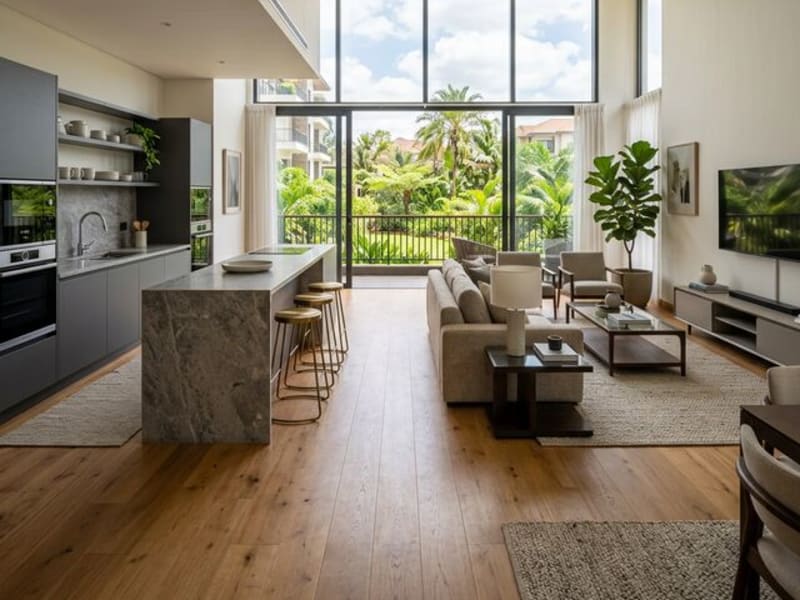
1-Bedroom Double-Volume Loft at Aquarius Residences Kilimani
Iconic 65 sqm one-bedroom double-volume loft with 5.8-meter ceilings and mezzanine bedroom
KILIMANI · DENNIS PRITT ROAD, KILIMANI, NAIROBI
1-Bedroom Executive Suite at Aquarius Residences Kilimani
Curated 44 to 54 sqm one-bedroom executive suite optimized for high-yield short-stay rental

Kilimani · Dennis Pritt Road, Kilimani, Nairobi
Aquarius Residences
Curated 1 and 2-bedroom executive suites and double-volume lofts on Dennis Pritt Road
Upper Hill · Mawensi Road, Upperhill, Nairobi
Aria Capital Residences
Signature 1, 2 and 3-bedroom luxury sky residences on Mawensi Road